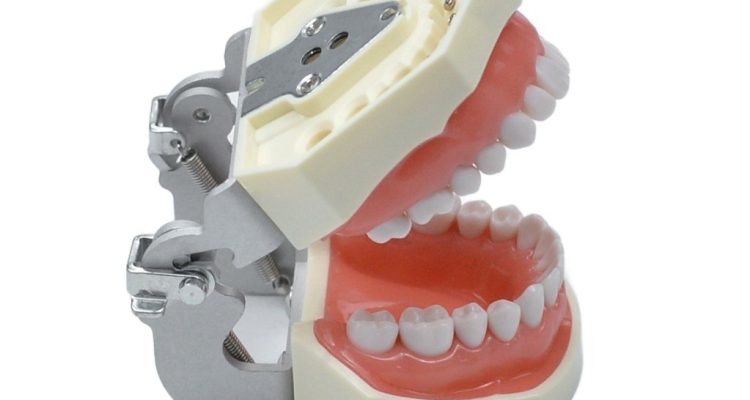
A basic pre-clinical simulation jaw is a must-have teaching model. It is essential for dental schools, training centers, and private practices. This tool allows the trainee to practice basic crown preparation. It also develops critical handpiece control.
This model bridges the gap between dental anatomy and operative dentistry. Students transition smoothly from theory to tactile application. Working on realistic simulated tissue builds essential manual dexterity. This foundation is crucial for safe patient care.
In the modern treatment workflow, a tooth preparation model integrates clinical and laboratory fabrication. A complete end-to-end simulation is permitted.
Ergonomics and Clinical Posture
Standard 28-tooth or 32-tooth typodonts integrate directly into simulation units. A magnetic metal sheet easily snaps the jaw into a phantom head. This secure mount prevents shifting during high-speed reduction.
Trainees can drill the preparation spot using a high-speed turbine. The phantom head allows approach from different clinical angles. This forces the student to establish and maintain proper body posture.
The Digital Restorative Workflow
Modern dentistry relies heavily on digital data. This simulation model supports the complete CAD/CAM cycle.
After tooth preparation, an intraoral scanner captures the oral digital impression. Students practice maintaining a dry field and optimal scanner angulation. The digital data is then shared with an outsourced laboratory.
The laboratory first receives the digital STL impression data from the clinic. Technicians analyze the file and design the optimal slicing parameters for the specific resin. The 3D printer then utilizes light-curing technology to precisely print the anatomical tooth structure model. Once the physical model is processed, the dental technician can try the milled zirconia prosthesis directly onto the printed arches to verify marginal fit and contacts. Finally, the technician completes the restoration through manual contouring and precise ceramic layering to achieve optimal clinical aesthetics.
Simultaneously, a CAD/CAM machine mills the custom zirconia crowns.
After the anatomic zirconia crowns arrive back at the dental school, the final clinical step occurs. Students simulate the bonding procedure directly on their initial preparations. The restorative cycle is complete.
Build Inside Laboratory Option
An alternative simulation system brings laboratory fabrication directly into the dental school. Dedicated in-house laboratories eliminate the need for outsourced production. These facilities are fully equipped with advanced digital dentistry tools. Key parameters include chairside 3D printers, high-resolution benchtop scanners, and rapid chairside milling units. This infrastructure creates a comprehensive, closed-loop educational environment.
Students actively master every phase of modern restorative dentistry. The curriculum seamlessly integrates clinical handpiece control and final cementation with advanced laboratory design. Trainees scan their typodont preparations and instantly process the digital data on-site. They directly oversee the CAD/CAM fabrication and complete digital workflow. Finally, students execute the clinical bonding procedure on their original simulated jaw. This integrated system maximizes training efficiency. It firmly bridges the gap between chairside operative techniques and complete in-house digital manufacturing.
Benefiting Dental Training
These features ensure the model provides an authentic clinical experience:
Polyurethane Resin Teeth: The simulated dentition mimics natural human enamel and dentin density. This delivers realistic tactile feedback and resistance during bur cutting.
High-Density Elastic Red Gum: The elastomeric gingival mask is fully removable. It replicates real mucosal tissue resistance. This allows for realistic mechanical retraction and precise subgingival margin placement.
Simple Hinge Articulator: The Nissin-style plate-mount system provides stable articulation. It reliably maintains a consistent vertical dimension of occlusion.
Magnetic Mounting Interface: The basal metal sheet allows instant installation. It secures the typodont firmly inside standard phantom heads.
Screw-Retained Fixation: All teeth can be individually removed. A dedicated screw tool allows rapid replacement of prepared units for continuous practice.
Sourcing Equipment for Dental Education
For dental schools and laboratories looking for these advanced teaching models and digital lab equipment, Dentsma is a premier digital platform. They provide a comprehensive selection of all kinds of clinical supplies in digital brochure, restorative materials, lab equipments, and modern simulation equipment available to elevate your educational programs.